
Skip to content
Inytialgo
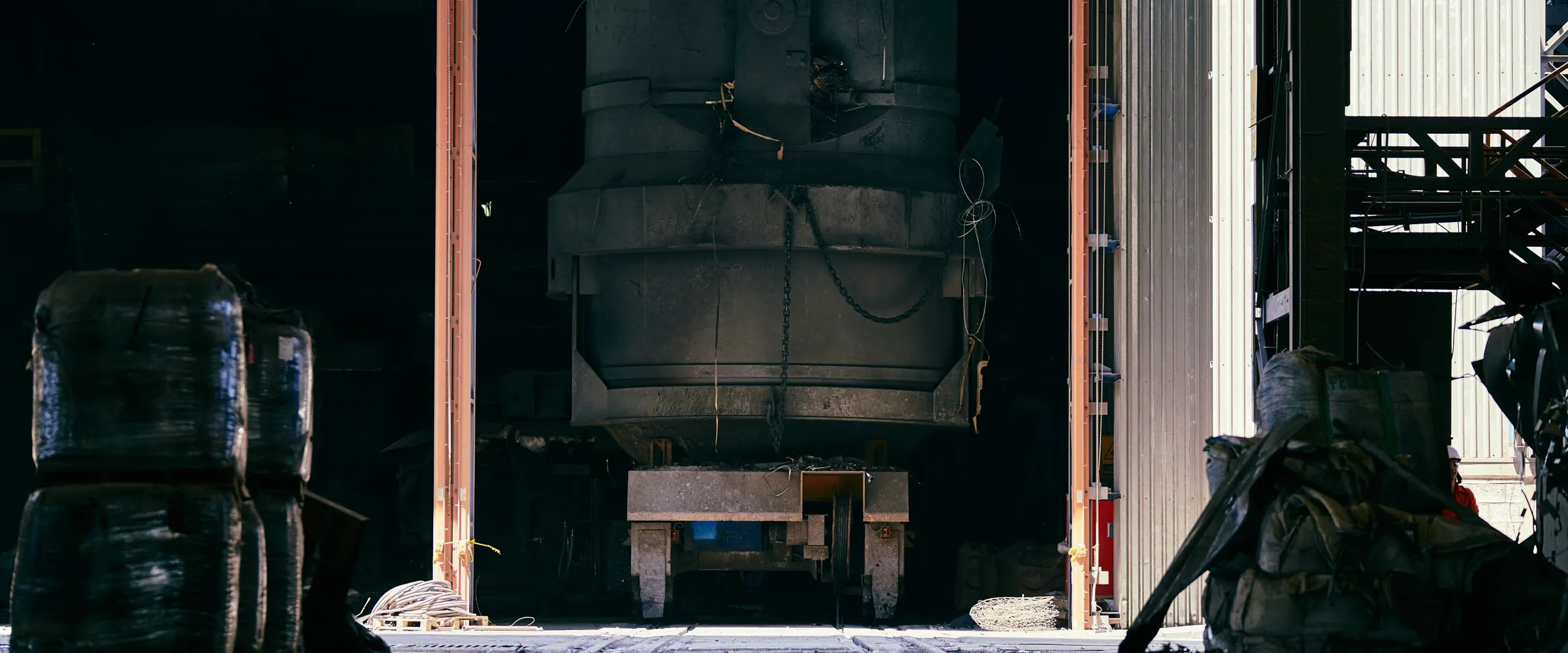
Industrial foundry floor with heavy machinery

Advanced specialization programs

High pressure die casting training for plant teams

Advanced specialization programs in high pressure die casting (HPDC), die design and process improvement. More than 1,000 technicians and operators from more than 100 organizations have already been through them.

These are not off-the-shelf courses: the final syllabus is built with your parts, your dies and the defects that are costing you money today. The goal is not to pass an exam, it is that the decision taken in front of the machine changes the following Monday.

Three paths

Programs

Three programs covering the whole path: how the gating is designed, how the die and the machine are set up together and how the defect is read when it appears.

24 hours

Die and die casting machine setup

A complete workflow to reach the optimal, lowest-impact set of parameters, matched to the real limits of your machine and your die, not to the ones in the catalog.

  • How a stable process window is built and why it gets lost.
  • First and second phase, intensification and compaction: what each parameter really moves.
  • Reading the shot curve and what to do with what it says.
  • Setting up a new die and recovering a die that stopped performing.

Intended for: Process engineering, plant engineering and production supervision.

16 hours

Identifying and correcting HPDC defects

Classification of defects by their morphology, their occurrence and the factors that cause them, in order to analyze their origin and decide on the right correction instead of testing blindly.

  • Gas, shrinkage and entrapment porosity: how to tell them apart on the part.
  • Cold shuts, short shots, blisters, sinks and soldering.
  • From the defect to its cause: die, process, metal or handling.
  • Best practices in metal handling, from the furnace to the ladle.

Intended for: Quality, operators, process leads and plant supervisors who decide what happens to the rejected part.

20 hours

Gating design for aluminum, zamak and magnesium

Designing the gating system under the principle of pressure containment, as opposed to the conventional velocity-driven approach. A change of criteria that shows on the part.

  • Sprue, runner and gate: what each section decides and in what order it is sized.
  • Venting and vacuum: why air matters more than metal in thin walls.
  • Cooling and thermal balance of the die tied to the gating design.
  • Validating the design with simulation before machining the steel.

Intended for: Foundry engineering, product developers and die-making shops.

Do you need a different focus, or to combine content from several programs? Tell us what your team needs and we will put the syllabus together.

Profiles

Who is it for?

The programs work better when different profiles sit in the same room: a good part of a plant’s problem lives on the border between process, quality and die.

Process engineering

Leaves with a process window that can be defended with data and with the correlation between each parameter and the defect it causes.

Quality

Learns to classify the defect by its morphology—not by where it shows up on the part—and to demand the correction that matches that cause.

Die engineering and tool shops

Takes away judgment on gating, venting, cooling and ejection to design dies that open early and last longer.

Plant supervision and management

Understands the die-cell pairing and which stoppages are worth attacking first to recover real availability.

Operators

Works on metal handling, spraying and start-up: what they do well or badly shows in the scrap of the shift.

How it is delivered

We work with plants all over Mexico in three formats, and often the best option is to combine them: the theory online and the machine part at the plant.

In-company, at your plant

Programs tailored to your company, delivered at your own facilities. It is the format that transfers judgment fastest, because you leave the classroom to look at the cell, the die and the part being discussed.

Online, live

The same content in short live sessions, designed for teams spread across plants or for schedules that cannot stop for whole days. It includes technical support on injection and on how to get the most out of the Siemens software.

Webinars

Short, open sessions on what is happening in the die casting world: technology, materials and shop-floor problems. A good way to get to know the approach before booking a full program.

From the course to the plant

Training is the cheapest way into a change of criteria, but it is rarely the end of the road. Once the team knows how to read the defect, the natural next step is wanting to solve it on the part that is costing the most and having the tool to validate it before touching the steel.

Support inside your process

If after the course you want to attack a specific case—scrap, cycle time, tooling life—we come in with a bounded project and measurable objectives.

See consulting

The tool inside your engineering

We distribute Simcenter Inspire Cast (formerly Altair Inspire Cast): if your team is going to validate filling and solidification on their own, the training can include the software start-up.

See the software

Request the syllabus

Tell us which program you are interested in, how many people would attend and what their profiles are. We send you the detailed syllabus, the proposed schedule and the delivery options for your plant.