
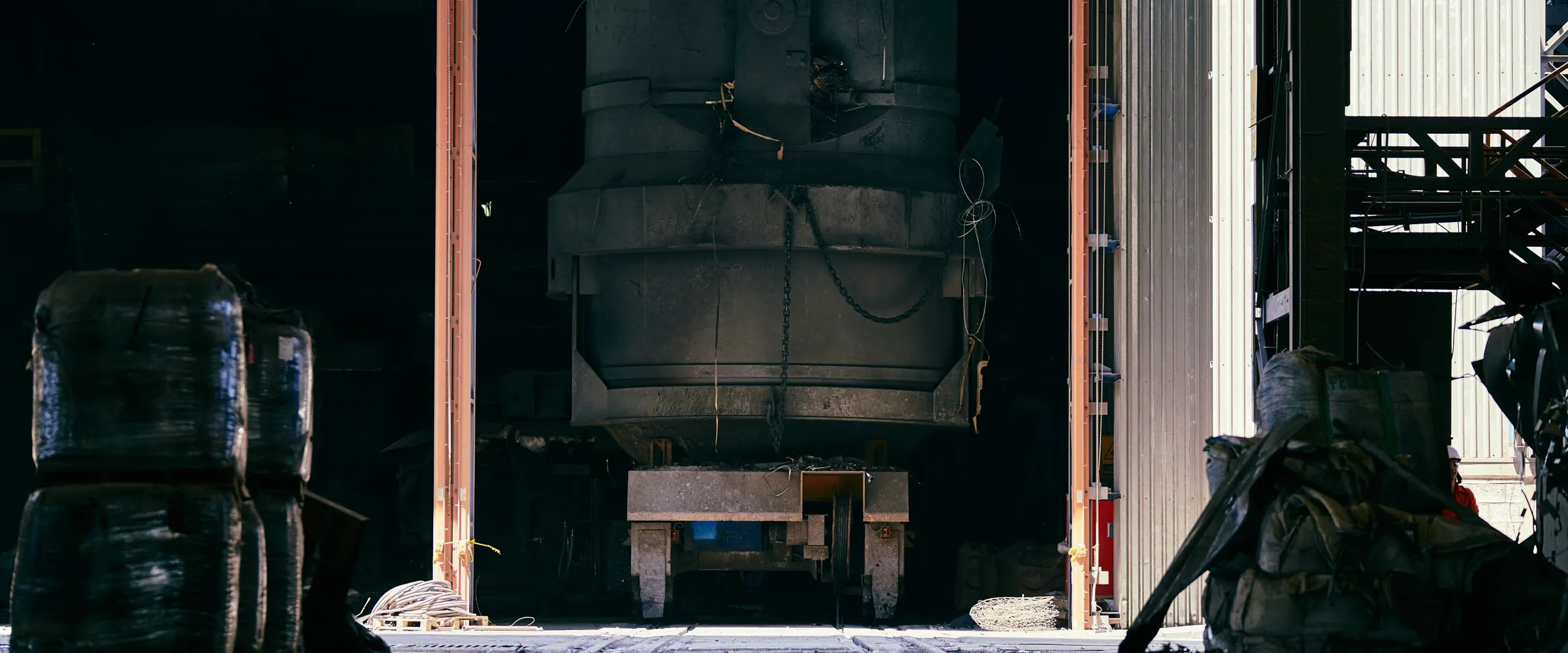
Castvac and Agrati in Mexico
High pressure die casting equipment
We are agents for Castvac and Agrati: vacuum valves and new-generation die casting machines for high pressure die casting (HPDC) plants running aluminum, zamak and magnesium. Both lines attack the same thing by two different routes: the cost of poor quality and the cost of energy.
We do not sell out of a catalog. Before quoting you a machine we review your process, because buying equipment for a problem that lives in the die is expensive twice over.
Vacuum
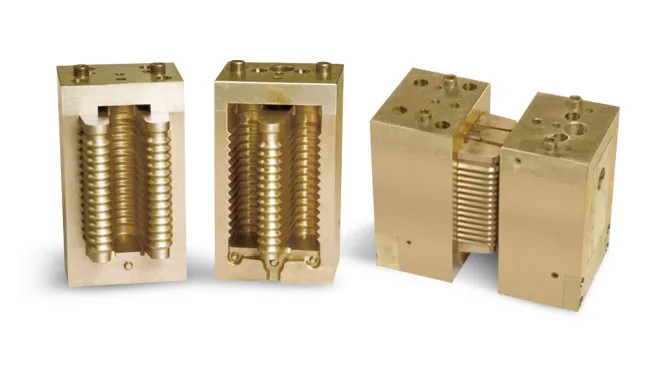
Castvac: vacuum valve for die casting
A robust, reliable and affordable vacuum valve. Its job is to take the air out of the cavity while the metal comes in, so the part does not end up with gas porosity and withstands heat treatment, welding and machining without surprises.
The classic problem with vacuum valves on the shop floor is not the concept: it is that they jam, they get dirty and they end up stopping production. Castvac is designed exactly for that.
Castvac
What you gain with it
Strong savings in operating cost
Compared with conventional vacuum solutions.
No production stoppages
From the mechanism jamming, which is the failure that makes many plants end up disconnecting the vacuum.
Larger flow section
Than a conventional valve: it evacuates more air in the same filling time.
Insensitive to the normal deviations of HPDC
Uneven die closing, leaks, real plant conditions.
Injection
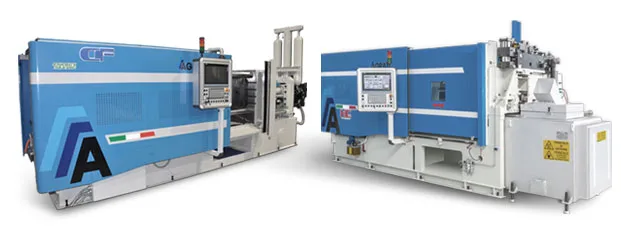
Agrati: new-generation die casting machines
Agrati die casting machines rethink the hydraulics of the machine: a single accumulator, their own pressure transformation system on the return line and a core made up of a synchronous motor and a gear pump. The result is uniform operation with a consumption reduction of up to 70%.
Uniform shot quality
The ECO-DRIVE system minimizes the volume of hydraulic fluid displaced and stores the excess in a pressure transformer that cuts the end-of-fill peaks. It translates into a stable shot from cycle to cycle and minimal flash.
Low consumption and lower cost
The synchronous motor only runs when there is flow demand and, together with the gear pump, outperforms the conventional pairing of an asynchronous motor and a two-stage pump. Less electricity consumption and less degradation of the hydraulic oil.
A different hydraulic concept
A single accumulator, smaller displaced volumes, smaller-section piping and an integrated brake. Fewer elements in play means fewer points where the machine can drift out of range.
Minimal maintenance
Fewer components and a design oriented to reliability bring down the maintenance load of the machine and that of the hydraulic fluid itself.
The process, step by step
How you buy equipment through us
We represent these lines in Mexico from the technical side, not the commercial one: our job is that the equipment arriving at your plant is the one that solves your problem.
01
Diagnosis before quoting
We review the part, the die, the machine and the defect or the consumption you want to attack. If the problem is not fixed with new equipment, we tell you before you spend.
02
Technical sizing
We define which configuration matches your process—alloy, part size, tonnage, cycle time, cell layout—and what you can expect in numbers.
03
Proposal and delivery to Mexico
We handle the proposal, the lead times and the delivery terms with the manufacturer, all the way to your plant.
04
Start-up and trained staff
A new machine performs as well as whoever operates it. The start-up comes with training for the process and maintenance staff.
Is the problem the equipment or the die?
It is the question worth settling before signing a purchase order. With casting simulation you see whether the porosity comes from the filling, from the die or from missing vacuum; and with consulting the rest of the process gets in order. Often the equipment is the right answer: the difference is reaching that conclusion with data.
You can also write to us with the details of your part and your machine.