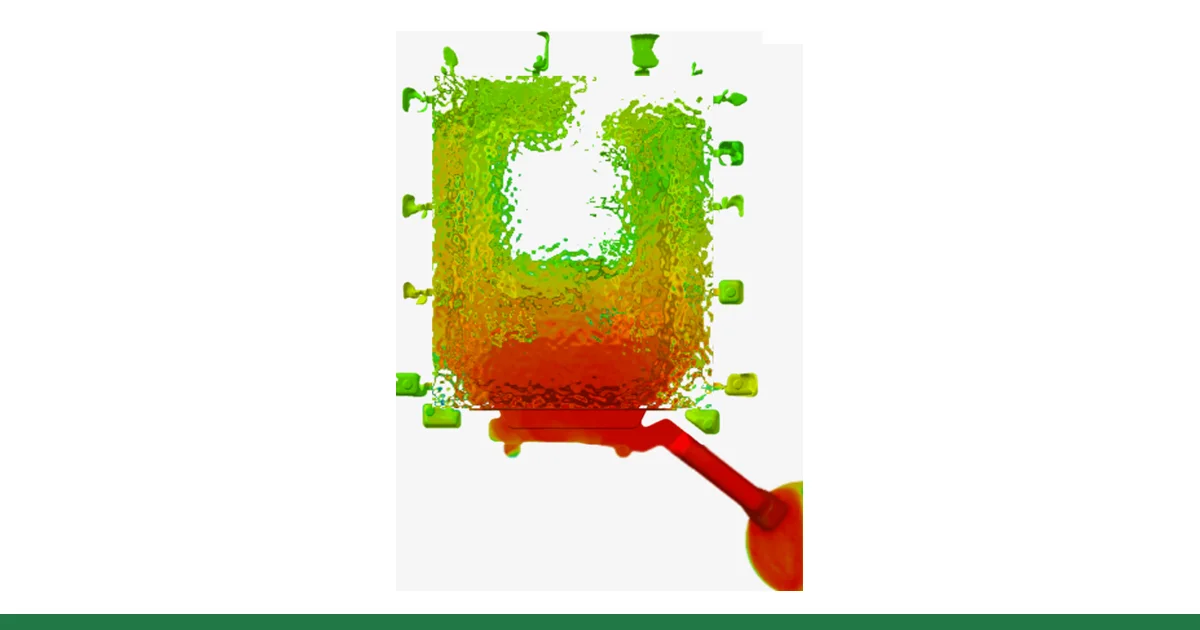
The full case
INYTIALGO applies a vacuum-assisted die casting approach on its projects built on simple installation, stable operation and integration with the die design. The goal is to make vacuum an accessible industrial tool for reducing filling defects and scrap while working with gentler shot conditions.
The approach uses passive evacuation devices that stop the aluminum by cooling and solidifying it (better known as chill blocks), connected to a suction system. But success does not depend on the device alone: the filling design, the sealing of the die and the process conditions all have to let it use its evacuation capacity.
A single suction point, defined through simulation
One of the key decisions on these projects has been to concentrate suction at a single point. That choice simplifies installation, but it means studying how to lead the air to that point and keep it from being cut off by the advancing aluminum.
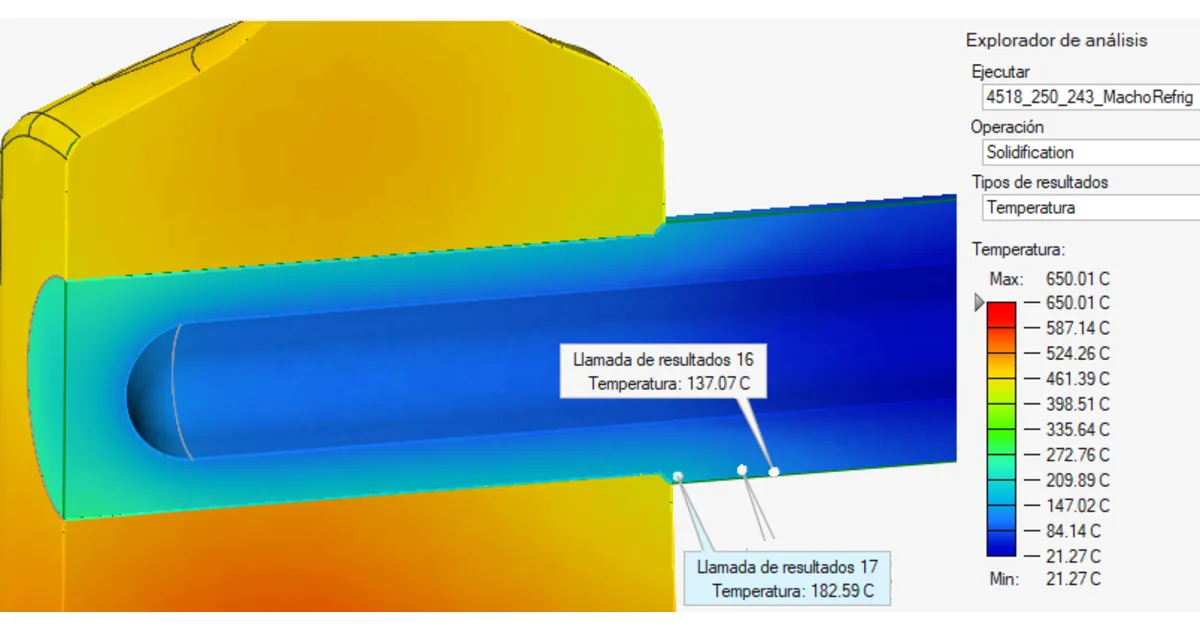
Filling simulation in Simcenter Inspire Cast (formerly Altair Inspire Cast) shows how the metal fronts evolve and where air pockets can form. With that information, the suction point is located and the gating and venting paths are designed around it.
Simplifying the system therefore rests on a design decision: making it easy for the air to reach the suction point within the time available to evacuate it.
A tight die is what makes vacuum pay off
Working together with the die designer and the die caster is essential to get a tight die, with robust solutions suited to the die casting environment.
An excellent evacuation device is not enough. A die that does not close properly or that leaks aluminum also gives air a way in. As long as those paths stay open during suction, the system has to extract both the air originally in the cavity and the air still coming in from outside, which limits the vacuum it can reach.
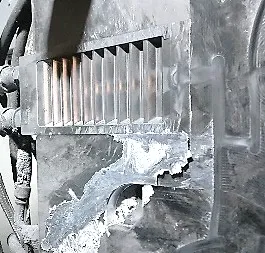
The same review has to extend to other parts of the process, such as the sealing of the plunger and shot sleeve or excess die lubricant, which can add more gas. These conditions have to be solved together with the vacuum installation to get the expected result.
The die and process requirements are set out in INYTIALGO’s technical guide to high-pressure die casting.
On the blog, where vacuum sits among the decisions that drive porosity and heat treatment: aluminum die casting.
Stable operation, shot after shot
The third key element is keeping the system’s behavior the same from one shot to the next. Nominal suction capacity is of limited value if the real flow conditions change with the relative position of the die halves, or if the plant has to step in again and again to stop aluminum leaks.
That is why choosing the device has to weigh, together, its ability to evacuate air, stop the aluminum and keep a stable effective flow section through production.
Even among passive, cooling-based devices, the solutions are not equivalent. The difference lies in how they strike that balance and how well they hold it under the die’s real working conditions.
The INYTIALGO solution
In passive devices, a large nominal flow section does not guarantee more evacuation capacity in production. If that section comes from excessive clearances, it can encourage aluminum leaks. To prevent them, the two halves of the device are shifted relative to each other, throttling the passage and also reducing the section available to evacuate air. Effective capacity then falls below the advertised figure and depends on the adjustment made in the plant.
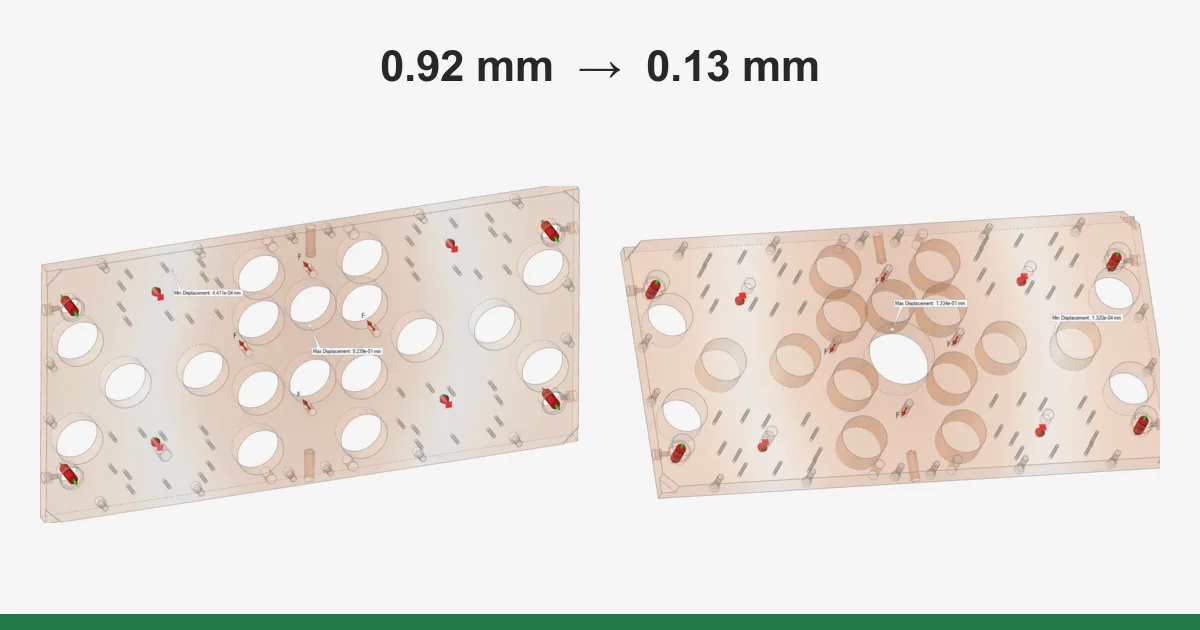
That trade-off matters most in large dies. Misalignment between the fixed and moving halves can noticeably change the passage through the device, even when those deviations are acceptable for the part tolerances. Throttling can help stop the aluminum, but it hurts air evacuation.
INYTIALGO’s selection answers the need to keep both functions stable. Its devices, Castvac vacuum valves, combine small flow clearances, which give a margin for retaining the aluminum against small opening deviations, with a system that limits the relative shift between the two halves and preserves the effective evacuation section.
Integration is defined together with the die designer and the die caster to keep that behavior in large dies too, with no extra adjustment in the plant. The selection criterion, then, is the ability to keep evacuation effective and aluminum retention reliable from one shot to the next.
- #vacuum
- #chill block
- #porosity
- #die sealing
- #Inspire Cast
- #LEAN HPDC