Dies 7 min read
Die cast tooling: what you are buying, what it costs and how long it lasts
By Inytialgo ·
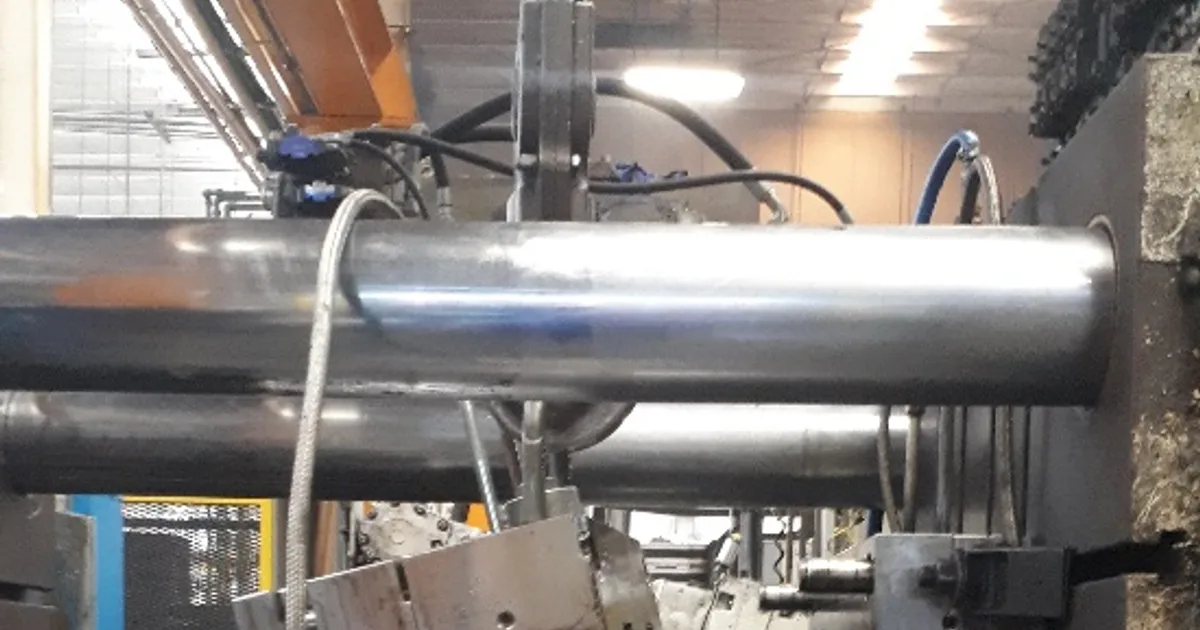
Die cast tooling is the steel die and everything that makes it run a production part: cavity and core inserts, the die base that holds them, the runner and gate system, overflows and vents, slides for undercuts, the ejection layout, cooling circuits and — increasingly — the vacuum connection. You are not buying a shape. You are buying a thermal machine that happens to have your part’s shape cut into it.
That framing decides most of what follows. The cost of die casting tooling is driven far more by how many moving parts the die needs and how hard it is to cool than by the size of the part. And its life is decided less by the steel you paid for than by how the die is run and maintained once it is on the floor.
What is die cast tooling made of?
A production die for aluminum is built from hot work tool steel, heat treated to a hardness that trades toughness against wear resistance. The die has to survive being flooded with metal near 660 °C and then sprayed with a water-based release agent, thousands of times, and that thermal cycling — not the injection pressure — is what eventually kills it.
The assembly usually splits into:
- Cavity and core inserts. The part-forming steel. This is where the money and the lead time concentrate, and the part that can be replaced without rebuilding everything.
- The die base. Plates, guides and the ejector housing. Often standardized, sometimes reusable across programs if the insert pockets are planned that way.
- The feed system. Sprue or shot sleeve interface, runner, gate. The single most consequential thing in the die for internal soundness.
- Overflows and vents. Where the first cold metal and the trapped air are supposed to end up.
- Slides and lifters. Every undercut you specified, made mechanical.
- Cooling and vacuum. Circuits, jets, and the valve interface if the part needs an evacuated cavity.
What drives the cost of die casting tooling
Ask for a tooling quote with a drawing only, and you will get a number based on assumptions. These are the assumptions worth making explicit, in rough order of impact.
- Number of cavities. More cavities means more steel, more machining and a larger machine. It is also the decision that most often gets made on annual volume alone, when part complexity and filling balance should have a vote.
- Undercuts and slides. Every slide is a mechanism: extra steel, extra fitting, extra maintenance and a new way for the die to fail. Removing one undercut at design review is usually worth more than any negotiation on the quote.
- Cooling complexity. A part with thick sections or a hot spot needs a cooling strategy that costs machining time up front and saves cycle time forever after.
- Tolerances and finish. Tight tolerance features and cosmetic surfaces drive bench work, which is the least visible and least compressible part of the build.
- Alloy. Zinc is kinder to steel than aluminum; a zinc die will typically run far longer before the cavity needs attention. That difference belongs in the cost-per-part model, not just the purchase price.
- Expected life. A die built for a short run and one built for a decade of production are different objects. Say which one you want before the quote, not after.
Prototype, bridge and production tooling
Not every die needs to be a production die, and buying the wrong class is a common way to waste money in both directions.
Prototype tooling exists to answer a question — does the part fill, does it assemble, does it pass a test — with a simplified die, softer steel and hand operations accepted between shots. It is cheap and it is slow per part.
Bridge tooling covers the gap between prototype validation and production capacity, usually with fewer cavities and a shorter expected life than the final die.
Production tooling is engineered for cycle time, uptime and maintainability over the whole program. Its economics are dominated by availability, not by purchase price.
The mistake is not choosing one over another. It is buying prototype tooling and then quietly running production on it, which happens more often than anyone admits and ends with an emergency insert.
What sets die casting tooling lead time
Lead time is rarely limited by machining. It is limited by decisions.
Design and DFM review, steel procurement and heat treatment, machining, bench fitting, and then tryout with its iterations — and the last one is the variable that moves. A die that needs three tryout loops does not cost three times as much in machine time; it costs three cycles of scheduling, transport, bench work and requalification.
This is the practical reason to resolve filling and thermal behavior before the steel is cut. Gate position, vent and overflow layout, and where the last air ends up can be settled on the model. Moving a gate in CAD is an afternoon; moving it in hardened steel is a repair with a story attached.
What shortens die life, and what does not
Die life is quoted in shots, but it is spent in thermal cycles and chemistry.
- Thermal fatigue produces the network of fine surface cracks — heat checking — that eventually prints on the part. It is driven by the temperature swing between injection and spray, which makes die temperature control and spray discipline a die life issue, not just a cycle time one.
- Soldering and erosion attack the gate area and any surface the metal hits fastest. Gate velocity that is too high buys you filling at the cost of steel.
- Mechanical wear shows up in slides, guides and ejector pins, and usually announces itself as flash or as ejection marks long before anything breaks.
- Handling and storage. Dies get damaged in the aisle and corroded in the rack far more often than anyone reports.
What does not extend die life is running the die hotter to fix a fill problem, or adding release agent to solve a sticking problem that is actually a draft angle problem. Both trade steel for a short-term result.
Preventive maintenance on a schedule — welded repairs planned rather than improvised, pins and slides replaced before they fail, a documented condition record per die — is the difference between a die that reaches its quoted life and one that becomes a monthly surprise.
What to check before you commit steel
- The part design has been reviewed for wall thickness, ribs, bosses and parting line, not just for function. The design rules that apply to a housing are worked through in die cast aluminum enclosure design.
- The alloy is settled, because it changes the die steel decision and the expected life — see aluminum die casting.
- The machine is identified. A die is built for a specific die casting machine: tie bar spacing, shot capacity and ejection stroke are all constraints, not preferences.
- The filling and thermal strategy has been simulated, with gates, overflows, vents and cooling decided on evidence.
- The ownership and maintenance terms are written down: who owns the die, who holds it, who pays for wear repairs and what condition it must be returned in. This is the clause that turns into an argument three years later.
Most of that list is decided in a week of engineering and paid for over the life of a program. It is why we push the analysis upstream: with our simulation software so your team can settle gate, vent and cooling decisions in house, and with our consulting when a tool is being specified for a part the plant has not run before. The cheapest change to die cast tooling is always the one made while the die is still a file.
- #die cast tooling
- #die design
- #die life
- #tooling cost
- #HPDC