
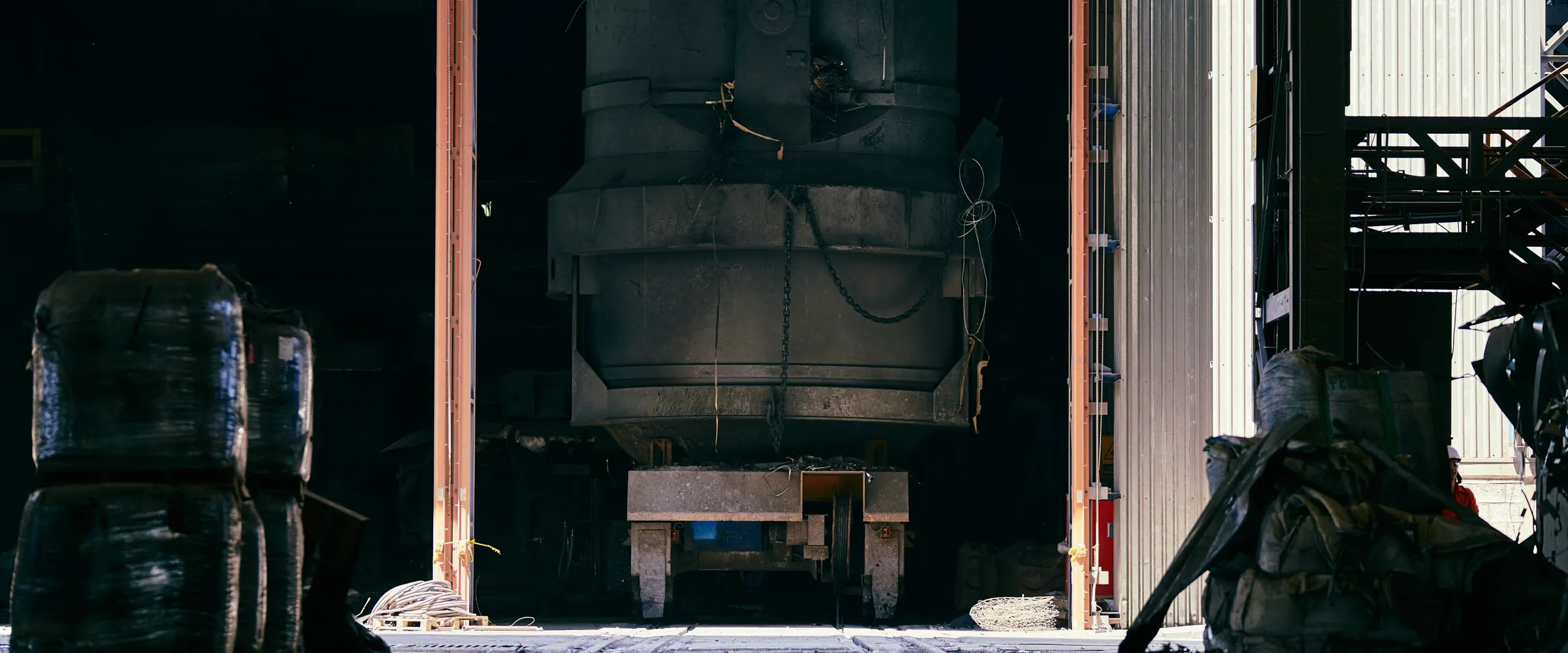
Technical support on the shop floor
High pressure die casting consulting
We bring scrap down, stabilize cycle time and extend tooling life by working where everything is decided: next to the machine. We support high pressure die casting (HPDC) plants running aluminum, zamak and magnesium in Saltillo, Monterrey, Querétaro, the Bajío and the rest of Mexico.
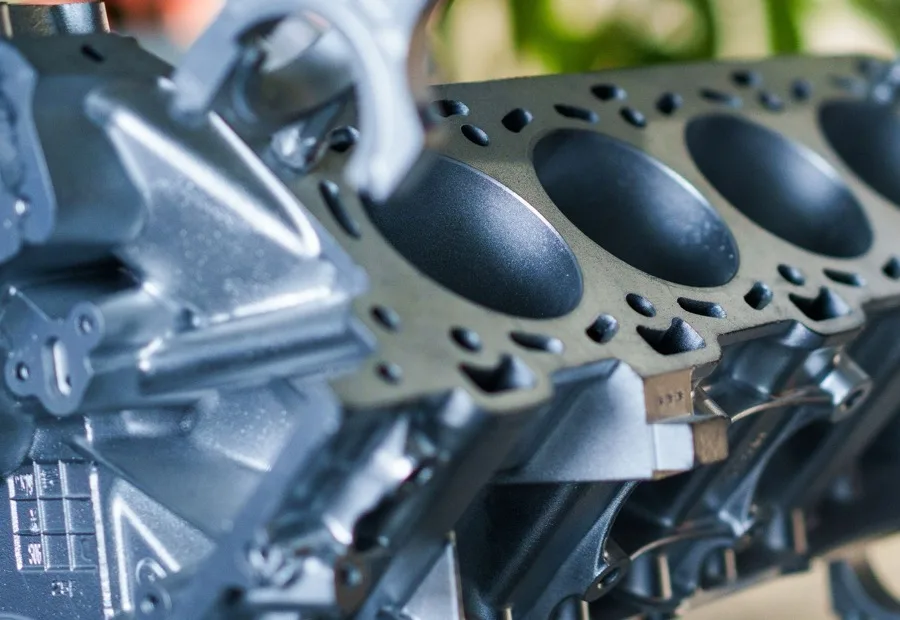
When it makes sense to call us
Do you recognize any of these symptoms?
These are the six that most often open a plant door for us. None of them is fixed by tightening one parameter: they are fixed once it is clear what is causing them—die, process, metal or cell—and you act on that cause.
-
Scrap will not come down
Porosity, shrinkage, short shots or cold shuts that come back lot after lot, and rework has already become part of the standard cost of the part.
-
Thin-wall dies that never complete the fill
Wall thicknesses where the metal cools before it completes the cavity: every parameter tweak moves the defect somewhere else instead of removing it.
-
The cycle has stretched out
Spray time was extended so the part would release, and with it grew cycle time, die lubricant consumption and the effluent you have to manage.
-
Stoppages and micro-stoppages that break your planning
Parts that stick in the die, parts that drop off, ejection that deforms them. The cell stops dozens of times a shift and deliveries stop being predictable.
-
Tooling that dies before its time
Soldering, broken cores and inserts, erosion around the gate long before the number of shots the die should withstand.
-
The energy bill climbs on its own
Melting and holding furnaces, thermoregulators working harder than they need to, and no measurement telling you where in the process the consumption is going.
Scope
Five fronts where competitiveness is recovered
Every project is organized around these five fronts. It is rare to have to attack them all: the diagnosis says which one is costing the most money today and where it is worth starting.
Quality
Reducing porosity, part distortion and breakage of die components. We work on the real defect picture: classify the defect by its morphology and its occurrence, correlate it with the process parameters and attack the cause, not the symptom.
Cycle time
Going from 50 to 40 seconds is not achieved by pushing the machine harder. It is achieved with a robust die that opens early—with nothing sticking or dropping—and ejects fast without deforming the part, with cooling that does not force you to over-spray.
Energy and effluents
Minimizing furnace and thermoregulator consumption with effective settings, and using die lubricant surgically: less product, less water and less effluent to treat, with the same release capability.
Availability
Stoppages, micro-stoppages and major stoppages disturb planning far more than the report says. We analyze the die-cell pairing with data to find out what really stops production and in what order it is worth solving.
Tooling life
Die concept, materials, treatments and the thermal dynamics of the assembly determine how long it lasts. We analyze soldering, broken cores and inserts and wear to avoid premature degradation of the steel.
The work, step by step
How we work
We do not hand over a report and leave. We analyze, we audit and we propose time-bounded support to implement the changes with you, with measurable objectives from day one.
01
Diagnosis
We look at the whole process with data: the real parameters on the die casting machine, the defects on the parts, the condition and design of the die, cycle times and cell stoppages. No assumptions, and nothing changed yet.
Deliverable · process, die and defects with data
02
Simulation
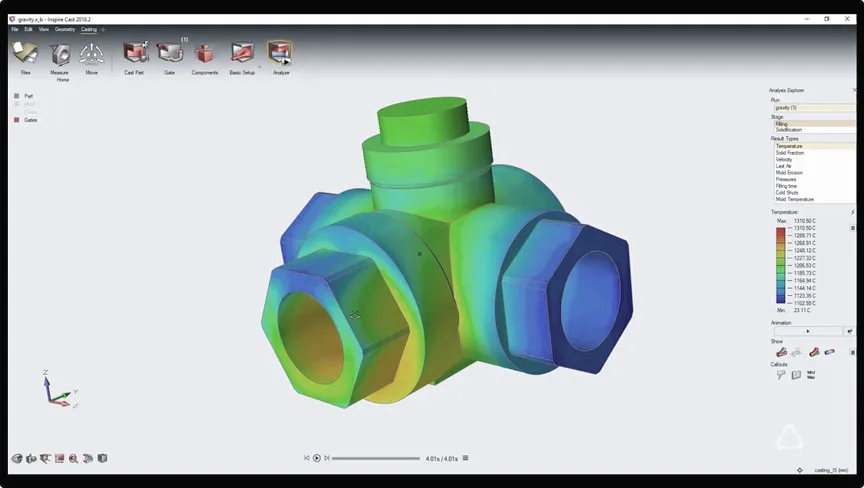
We reproduce filling and solidification to separate what is a design problem—gating, gate, venting, cooling—from what is a process or metal handling problem.
Deliverable · filling and solidification reproduced
03
Action plan on the floor
We deliver a bounded, prioritized proposal: what changes, in what order, what is expected from each change and which indicator measures it. Nothing that cannot be verified on the machine.
Deliverable · prioritized proposal with indicators
04
Implementation and handover
We support the rollout alongside your people, adjust with the real results and leave the technical judgment inside the team. The goal is that the improvement is still alive once we are gone.
Deliverable · rollout and judgment inside your team
Interim plant management
When the launch of a new project or a quality crisis puts the team under strain, we also step in as temporary reinforcement for the technical management: we take the front for a bounded period, with objectives, deliverables and an exit date defined from the start. It is one-off support, limited in time, not a permanent structure you have to sustain.
Simulation is part of the method, not an extra
In the diagnosis phase we use Simcenter Inspire Cast (formerly Altair Inspire Cast) to see filling and solidification before touching the steel or the parameters. That is where you tell whether the porosity comes from air trapped by the gating design, from shrinkage that is not properly fed or from a process problem: three causes that look alike on the part and are corrected in completely different ways.
We distribute the software, so the consulting can end in two places: in the action plan, or in the action plan plus the tool inside your own engineering so that you validate the next part yourselves.
Discover Simcenter Inspire Cast or see all the simulation software we distribute.
Who will be on the other side
Inytialgo is a consultancy specialized in light alloy die casting, founded by Òscar Íñigo. More than 1,000 technicians and operators from more than 100 organizations have been through our advanced specialization programs, and today most of our work is in Mexican plants.
That means two concrete things for your project: whoever looks at your die has seen that defect before in other plants, and we speak the language of your shop floor, not only that of the meeting room.
Get to know the track record behind Inytialgo or the training programs for your team.
The other three lines
It almost always starts with the software and ends on the shop floor: simulate a part, understand what is going wrong and leave your team able to repeat it without us.
Simulation software
Filling and solidification simulation and structural analysis with the Siemens tools. Licensing, rollout and support in Spanish.
Training
Training so your team decides on technical grounds and not on intuition: process, die, alloy and defects.
Equipment
Die casting equipment—vacuum systems, die casting machines—chosen for what your process actually needs.
Frequently asked questions
What is the difference between hiring the consulting and buying the software?
The software is the tool; the consulting is the judgment to use it and to decide what to change at the plant. Some clients start with a bounded project on one problem part and later bring simulation into their own engineering, and some buy the license and ask us to support them through the start-up. Both routes work.
Do you work at the plant or is everything remote?
Both. The desk diagnosis and the simulation are done remotely, and the phases that require being next to the die casting machine—setup, validation of changes, start-up of a new die—are scheduled as visits to your plant. The plan defines from the start what gets solved in each mode.
How long does a consulting project last?
It depends on the scope. A project on one specific part or die is measured in weeks; an interim plant management is measured in months, always with an agreed exit date. Before we start we close duration, deliverables and how the result is going to be measured.
Which alloys and what kind of parts do you work with?
Die casting of aluminum, zamak and magnesium: from thin-walled structural parts to components with leak-tightness or finish requirements. If your case is gravity or low pressure casting, tell us and we will be honest about how far we can help you.
What information do you need to give me a proposal?
For the first conversation the drawing or the 3D model of the part, the alloy, the machine tonnage and a description of the defect with photos are enough. With that we can already point you to whether the origin is in the gating design, in the process or in the die, and what it would take to attack it.
Let’s start with one part
Pick the part that is costing you the most scrap this month and schedule a session. We review its geometry, its defect and its parameters, and we tell you frankly whether there is room for improvement and where it is. If there is none, we tell you that too.