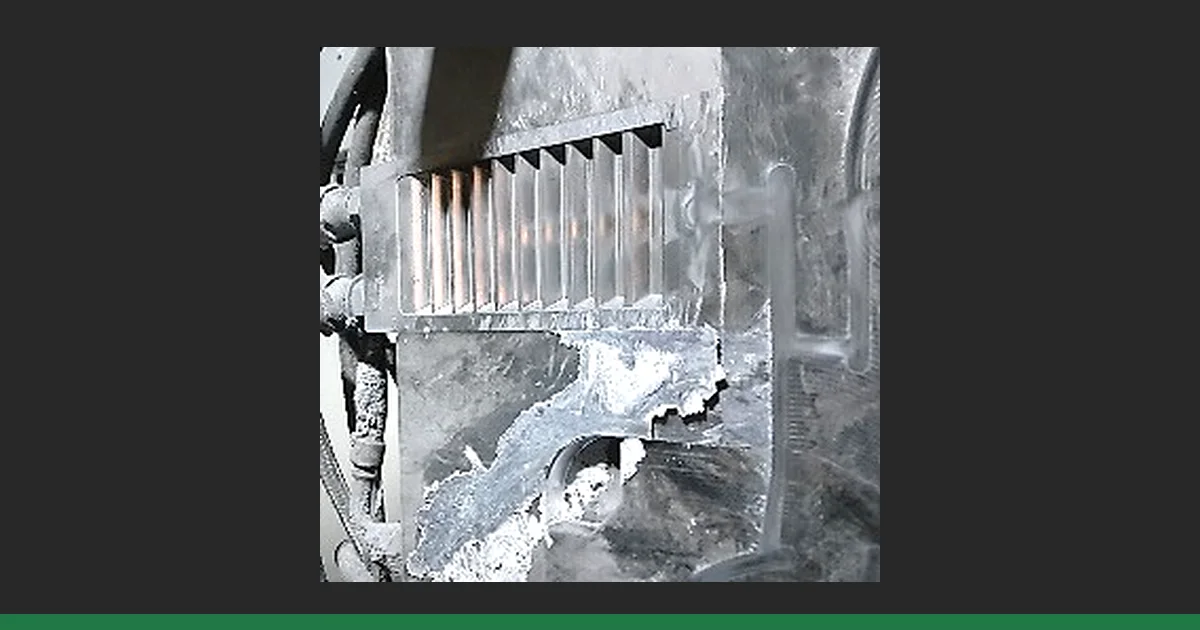
The full case
A project the industry considered impossible
Casting a part with 1,400 cm² of projected area without exceeding roughly 530 tonnes of opening force. That was the challenge INYTIALGO faced.
“It’s impossible.” “This is a job for a 900-tonne machine.” “It can’t work.”
Those reactions sum up how the project was first received. Yet today the part runs on a 580-tonne machine at one of our customers’ plants, at high volume and with scrap rates under control.
Getting there meant building the die and the process around one fundamental condition: working with a metal pressure compatible with the available clamping force. Plunger selection, part geometry, gating design and the thermal role of the overflows were the keys.
First challenge: working with pressure limited to 370 bar
The first condition was to cast the part with a specific metal pressure limited to 370 bar, about 5,400 psi. Over 1,400 cm² of projected area, that pressure pushes the die halves apart with roughly 528 tonnes: that figure sets the 530-tonne limit, and the 580-tonne machine covers it with margin. Staying within that limit meant meeting several requirements from the very start of the project.
Choosing the right plunger diameter
Selecting the shot plunger diameter was one of the first fundamental decisions. It had to reach the required filling conditions while keeping the dynamic metal pressure within the set limit, with no intensification.
The plunger diameter therefore had to fit both the shot strategy and the pressure limit that governed the whole project.
A uniform wall thickness
The second requirement concerned the part itself: uniform wall thickness was a necessary condition for tackling the project under this pressure limit.
Here the geometry met that requirement and gave a favorable starting point. That was essential for designing a fill that could be completed with the pressure available.
Second challenge: a smooth, controlled fill
The next challenge was a clean fill: an orderly metal advance, with no abrupt changes in flow and no need for excess pressure. That was one of the keys to the LEAN HPDC approach on this project.
To get there, the runner and gate design had to make the flow fronts clearly identifiable, control how they advance and avoid air entrapment.
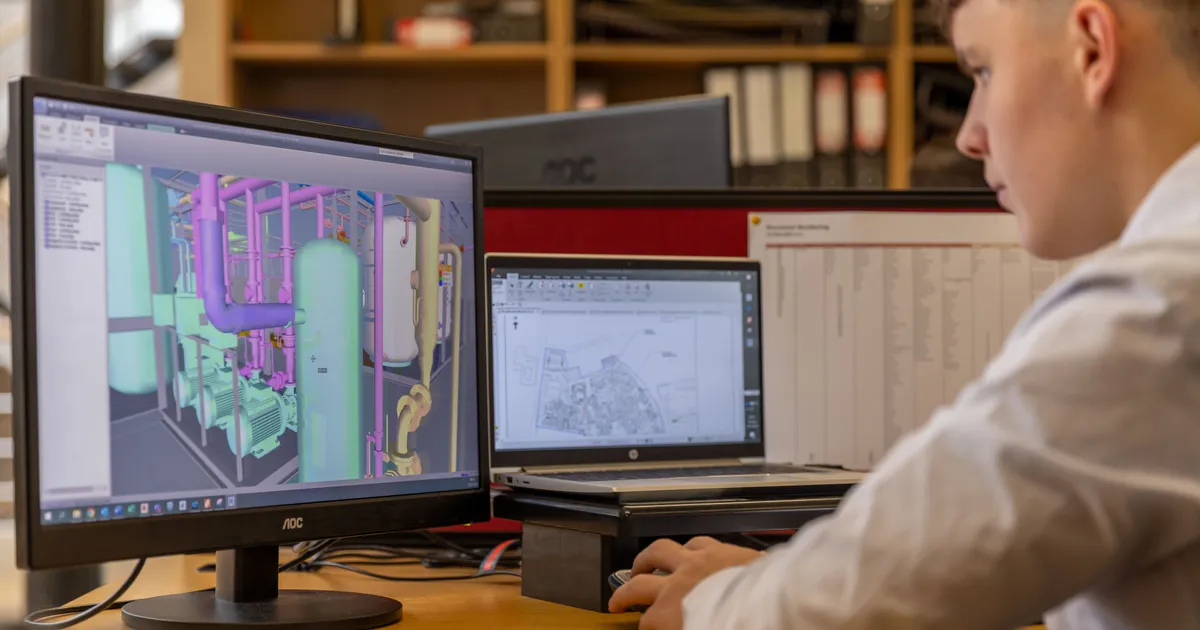
Casting simulation was essential to evaluate and tune that behavior before the die was built. Simcenter Inspire Cast (formerly Altair Inspire Cast) made it possible to analyze the fill and reach the right design quickly.
Simulation was thus part of developing the solution: it steered the design decisions toward a fill compatible with the project’s constraints.
Overflows as part of the thermal strategy
Getting that smooth fill meant paying attention both to where the overflows sit and to their thermal role.
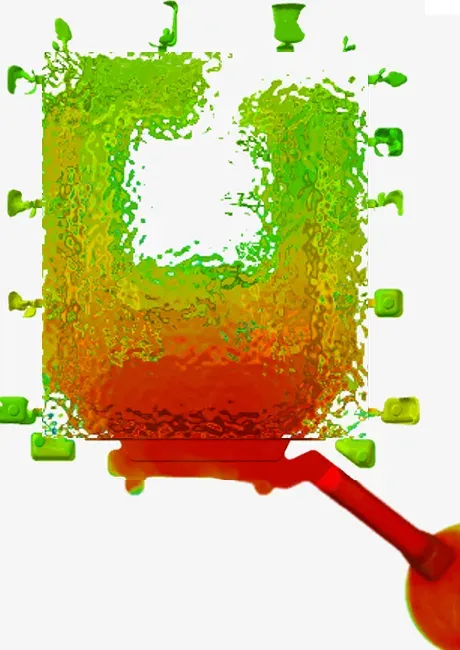
In a thin-walled part, the overflows had to help keep the metal hot up to the last points to fill and hold the die temperature, as well as keep the metal flowing wherever needed.
That role drove their sizing: the combined overflow volume was roughly two thirds of the part volume.
That is a considerable volume, and it has to be understood within the process strategy. Its size answered the filling and thermal balance needs of a thin part that had to be cast with limited pressure available.
Further challenges: shot sleeve fill and cooling time
All of the above also raised further challenges, such as balancing the shot sleeve fill percentage and managing the cooling time before the die opens.
Both had to fit the filling strategy and the thermal balance of the whole. Given their importance, they deserve a dedicated analysis, which we will cover separately.
From “it can’t work” to production
The project reached production by combining decisions that fit together: the right plunger, a uniform-wall part, a runner and gating system developed through simulation, and overflows sized for their thermal role as well.
That is the LEAN HPDC approach applied here: designing the filling conditions to cast with the pressure and clamping force available.
At a time of enthusiasm for gigacasting, when clamping force seems ever easier to come by, INYTIALGO treats it as a scarce resource: a capacity to be used to the full through die and process design.
The part runs today on a 580-tonne machine, at high volume and with scrap rates under control. A result that turned the initial “it can’t work” into an industrial reality.
- #LEAN HPDC
- #clamping force
- #thin wall
- #Inspire Cast
- #overflows
- #HPDC