Process 8 min read
Permanent mould casting: how it works and when it beats die casting
By Inytialgo ·
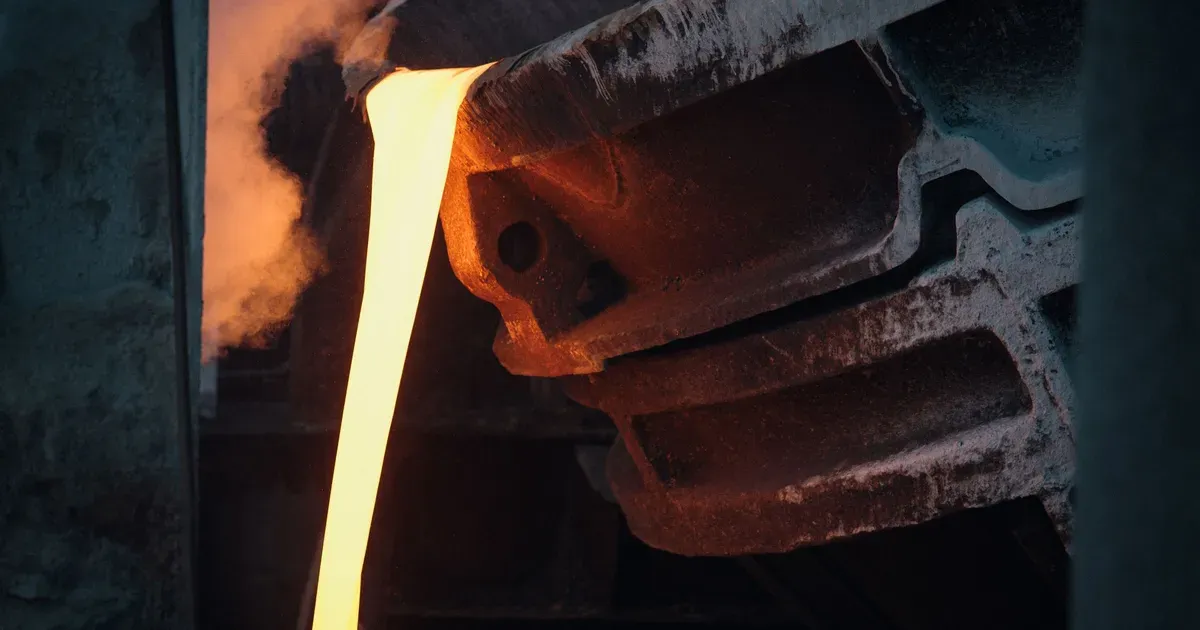
Permanent mould casting is a process in which molten metal fills a reusable metal die by gravity, or by a gentle push of low pressure, instead of being injected at high speed. It beats high pressure die casting when the part has to be heat treated, pressure tight or thick in section, and it loses when walls are thin, geometry is intricate and volumes run into the hundreds of thousands.
That choice is made once, early, and it is expensive to reverse. A part conceived for a gravity die has thick sections fed in sequence; move it to a high pressure machine without redesigning it and the shrinkage porosity shows up exactly where the metal was supposed to be sound. We work on the high pressure side of the fence, which is why this page is written to tell you when not to use it.
What is permanent mould casting?
It is casting into a die that is not destroyed to release the part. The die is machined from cast iron or hot work tool steel, it opens, the casting comes out, and the die closes for the next cycle. The industry also calls it gravity die casting, and in the United States it is spelled permanent mold casting: same process, three names.
What separates it from the two neighbours:
- From sand casting, the die is permanent, so the surface is better, the dimensions repeat and the metal cools faster against steel, which refines the structure.
- From high pressure die casting (HPDC), the metal is not shot by a piston. It flows in slowly, so far less air is trapped inside the part.
The cycle, step by step
- Preheat the die. A cold die freezes the metal before the cavity fills. The die is brought to its working temperature and kept there.
- Coat the cavity. A refractory coating is sprayed on the cavity. It insulates where the metal must stay liquid longer and helps the part release.
- Fill. The metal is poured into a pouring cup and runs down the sprue and runners into the cavity, or rises from below in the low pressure variant.
- Solidify. The part freezes from the far end back towards the risers, which keep feeding liquid metal into the shrinking sections.
- Open and eject. The die opens, the part is removed, the gating is cut off, and the cycle starts again.
Steps 2 and 4 are where the process lives or dies. The coating thickness is a design variable, not housekeeping: thicker coating slows freezing locally, and that is one of the few tools you have to make a section feed properly.
Gravity, tilt-pour and low-pressure: the variants
- Static gravity. The die stays still and the metal is poured in. Simple, cheap, and the most sensitive to how the pourer works.
- Tilt-pour. The die and the pouring cup rotate together while the metal enters, so it slides in instead of falling. Less turbulence, fewer oxide films trapped in the part.
- Low pressure (LPDC). The die sits above a sealed furnace and a small air pressure pushes the metal up a riser tube into the cavity. Filling is laminar and controlled, and the furnace itself feeds the part as it shrinks. This is the variant behind most cast aluminum wheels.
- Slush casting. The die is emptied before the centre freezes, leaving a hollow shell. A niche variant for decorative hollow parts.
Which alloys and which die materials
Permanent moulds run mostly non-ferrous alloys: aluminum and copper-based alloys above all, plus magnesium and zinc. Gray and ductile iron can be cast in permanent moulds too, but it is a niche; steel is not a permanent mould alloy.
The most common aluminum alloy here is A356, and the reason is heat treatment. Batesville Products, a permanent mould foundry, gives a typical tensile strength of 37 ksi (about 255 MPa) for A356 in permanent mould with a T6 heat treatment in its alloy comparison guide. That typical value is a foundry figure, not the minimum the standard guarantees.
The die itself is usually gray cast iron, or H13 hot work tool steel when a longer die life justifies the higher cost of the tool.
Permanent mould vs high pressure die casting
| Criterion | Permanent mould | High pressure die casting |
|---|---|---|
| How the metal enters | Gravity or low pressure, slowly | Piston, in fractions of a second |
| Trapped gas | Low | High, unless vacuum assisted |
| T6 heat treatment, welding | Yes | Not in conventional HPDC: trapped gas blisters |
| Pressure tightness | Good with sound feeding | Depends on porosity location |
| Thin walls | Limited | The process exists for them |
| Die cost | $10,000 to $90,000 | $60,000 to $500,000 |
| Die life | 60,000 to 100,000 parts | Around 100,000 parts |
| Cycle time | Minutes | Seconds to a minute |
The tooling and die life figures are from Batesville Products’ comparison of casting tooling, published in August 2023; the same foundry quotes a permanent mould life of around 60,000 parts in that article and «about 10 years, or 100,000 cycles» on another page, so read it as a range, not a point. Die life in HPDC depends heavily on alloy, thermal management and spray discipline, as we explain in what shortens die life.
On walls, the practice of the die casting trade is that suppliers become reluctant below about 2.5 mm in aluminum alloys (around 1 mm in zinc). If your part needs walls thinner than that, gravity filling will not get there either; that is a problem for HPDC and good gating, not for a permanent mould.
On dimensions, Batesville’s 2024 design guide for permanent mould aluminum castings gives a tolerance of 0.015 in for the first inch, plus 0.003 in for each additional inch, for features on the same side of the mould (0.38 mm for the first 25 mm), and an average as-cast surface finish of 200 to 420 RMS. Across the parting line the tolerance is larger.
Worked example: spreading the die cost over the volume
Take a pressure-tight aluminum housing that must be T6 treated, at 5,000 parts a year over a three-year program: 15,000 parts.
Pick a point inside each tooling range above: a permanent mould die at $40,000 and an HPDC die at $150,000.
- Permanent mould: $40,000 / 15,000 = $2.67 of tooling per part.
- HPDC: $150,000 / 15,000 = $10.00 of tooling per part, and the T6 requirement still has to be solved with vacuum or a redesign.
Now run the same housing at 100,000 parts a year without T6. With a die life of around 60,000 parts, the permanent mould needs two dies a year: $80,000 / 100,000 = $0.80 per part, against $1.50 for one HPDC die. But the cycle time now dominates: a process that makes a part in seconds instead of minutes needs fewer machines and fewer operators, and HPDC usually wins the piece price. Where exactly the curves cross depends on your cycle times and your machine rates, so put your own quotes into the same two lines before deciding.
Directional solidification decides the quality
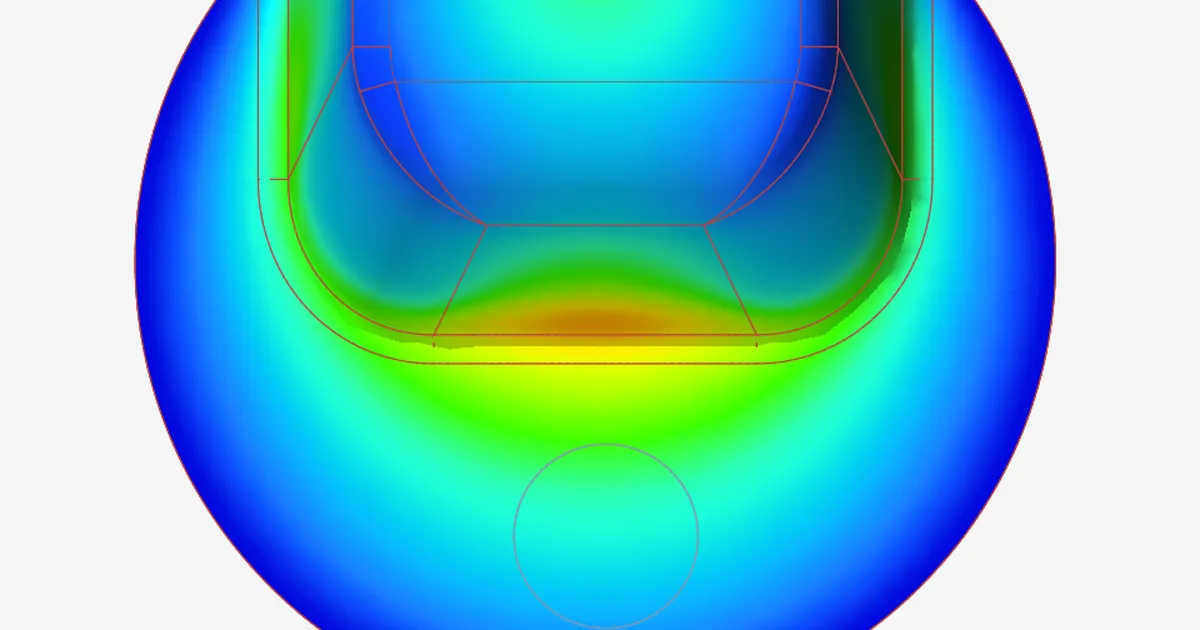
In a permanent mould the metal is not held under pressure while it freezes. Whatever shrinkage the part produces must be fed by liquid metal from somewhere else, so the part has to freeze in order: thin far sections first, risers last. When a heavy section freezes after the section feeding it, it pulls a shrinkage cavity inside.
That is why most shrinkage defects in gravity castings are not a metal problem but a sequence problem: the part froze in the wrong order. On the bench it shows up as a cavity under a heavy boss or behind a thick flange, exactly where the feeding path was cut off too early.
The levers are the riser size and position, the gating, the coating thickness by zone, and local cooling or insulation of the die. All of them are cheaper to move on a screen than in steel, which is where casting simulation software earns its place: filling and the solidification sequence are visible before the die is machined, for gravity and low pressure as well as for HPDC.
Where the choice actually gets made
The process is decided by what the part has to survive, not by habit or by the supplier you already have. Pressure tightness, welding or a T6 treatment point to permanent mould or low pressure. Thin walls, tight geometry and high volume point to HPDC, and if you land there, the full HPDC process is the next page to read.
One honest limit: no comparison table replaces a look at the actual part. If the part is still a model, running filling and solidification in die casting simulation software is the cheapest way to see which process it belongs to. If you already have castings with porosity that will not go away, our die casting consulting starts from that part on the bench.
- #permanent mold
- #gravity die casting
- #low pressure
- #process selection
- #HPDC
Found this useful? Add Inytialgo as a preferred source and you'll see our posts more often in your Google Search.
Add as a preferred source on Google