Process 8 min read
Die casting explained: how the process works and when it fits
By Inytialgo ·
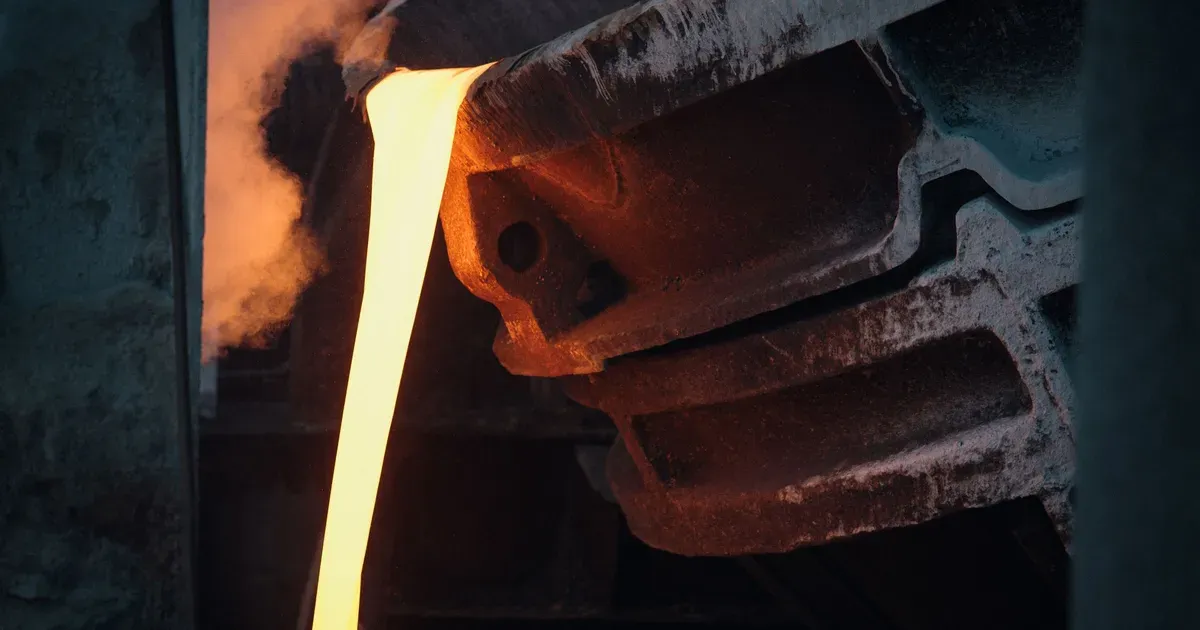
Die casting is a process in which molten metal is injected into a steel die at high speed and held under pressure until it solidifies. That one-line definition hides the decision that moves the most money in a casting project: which variant of the process your part belongs to. Getting it wrong is not paid for in the quote — it is paid for at tryout, when the steel is already machined and the part comes out porous, short or warped.
This is the full map of the process — hot and cold chamber, high and low pressure, permanent mold — and the criteria to know where your part falls before you commit steel.
What is die casting?
It is a forming process in which molten metal enters the die cavity pushed by a piston rather than by gravity, and solidifies under sustained pressure. Three traits separate it from every other casting process:
- High filling speed. The cavity fills in fractions of a second. That is what makes thin walls possible, and also what drags air in when the gating system is poorly conceived.
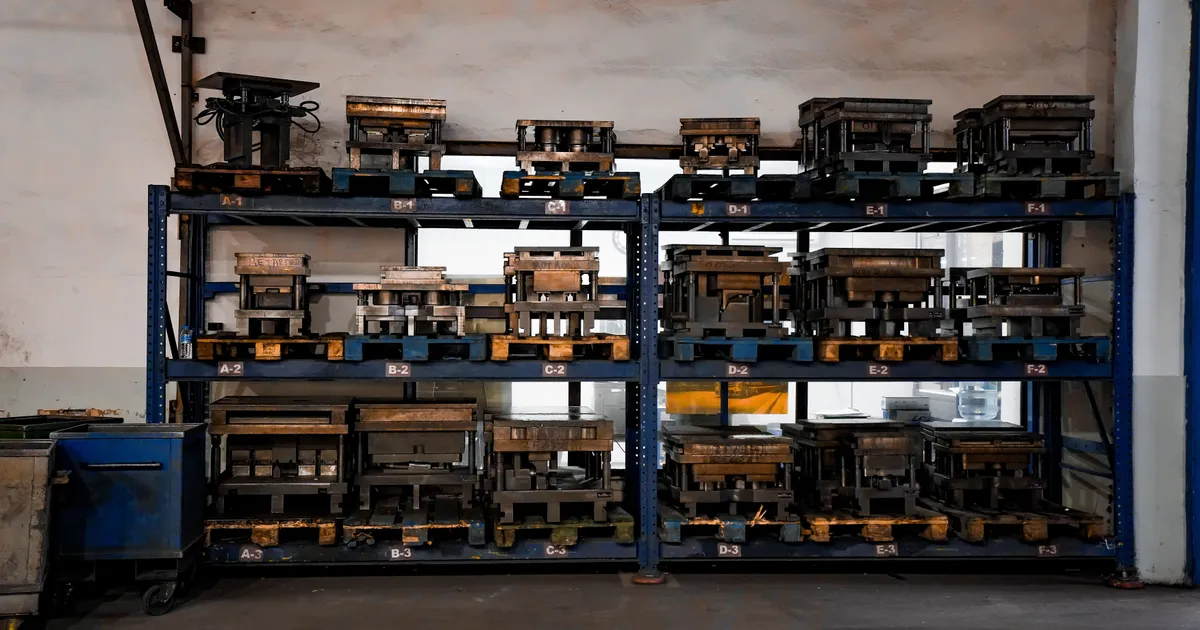
- A reusable metal die. The steel is machined once and runs hundreds of thousands of shots. High up-front investment, low cost per part: the process lives on volume.
- Pressure held through solidification. This is what compacts the metal and defines the internal soundness of the part.
Its high pressure variant is known as HPDC (high pressure die casting), and it is the one that dominates automotive production.
Hot chamber or cold chamber: the first fork
The difference is where the molten metal sits relative to the machine, and the alloy decides it — not the caster’s preference.
In a hot chamber machine, the injection system is submerged in the furnace: the metal travels through a gooseneck and enters the die without being exposed to air. This is the setup for zinc and magnesium, alloys whose melting point is low enough not to destroy a permanently submerged assembly. Short cycles, small parts, fine detail.
In a cold chamber machine, metal is ladled from an external furnace into a horizontal shot sleeve, and the piston pushes it into the cavity from there. This is the mandatory setup for aluminum: its working temperature would attack any permanently submerged component. It comes at a price — the metal starts cooling the moment it lands in the sleeve, and the biscuit remains as a witness of each shot — and with a practical consequence: in cold chamber, the time between ladling and injection is a process variable, not a logbook detail.
Die casting vs injection molding, permanent mold and sand casting
The names overlap in conversation, and the confusion is expensive because each process imposes its own part design.
| Process | How the metal enters | Where it fits |
|---|---|---|
| High pressure die casting | Piston, at high speed | High volume, thin wall, complex geometry |
| Low pressure die casting | Gentle push from below, laminar filling | Thick sections that demand internal soundness |
| Permanent mold casting (gravity) | The metal falls under its own weight | Medium volume, robust parts, cheaper tooling |
| Sand casting | Gravity, into an expendable mold | Low volume, large parts, prototypes |
| Plastic injection molding | Screw and piston, polymer melt | A different material family altogether |
Two clarifications worth making explicit. Injection molding normally refers to plastics: the logic of shrinkage, gating and ejection is not transferable to metal, and parts designed with that logic in mind tend to fail in HPDC. And a part conceived for low pressure — thick sections, fed from the bottom — cannot be moved to high pressure without being redesigned: shrinkage porosity will appear where there was none.
Mould or mold: does the spelling matter?
No. Mould is British spelling and mold is American; they are the same thing. What does carry a real distinction is die versus mold: in the die casting world, the steel tool is normally called a die, while mold is the common term in plastics and in gravity casting. Suppliers use both, so the safe move when quoting is to describe the process, not to rely on the noun.
Can you die cast steel?
No — not in conventional die casting, and the confusion is baked into the vocabulary: in this process steel is the material of the die, not of the casting. The tool is machined from hot-work tool steel precisely so it can survive thousands of contacts with molten metal, and the alloys being cast are non-ferrous — aluminum, zinc, magnesium — because their working temperatures leave that steel hardware intact. Molten steel, at roughly double the working temperature of molten aluminum, would destroy the die that is supposed to form it.
So «die casting steel» almost always means one of two things. Either castings produced in steel dies — which is simply die casting — or steel parts someone needs to source, and those belong to other routes: sand or investment casting and forging for structural steel, and metal injection molding for small, intricate stainless parts, a comparison developed in die casting vs injection molding. If the part must be ferrous, die casting is off the table and the sourcing conversation changes entirely.
What is the die cavity?
The die cavity is the void machined into the die that the metal fills: the negative of the part. It is formed between the two die halves — the cover half on the injection side and the ejector half on the moving side — plus the cores and slides that shape internal features. A die may hold one cavity or several identical ones; a multi-cavity die multiplies output per shot and also multiplies the demand on the gating system, because every cavity has to fill and solidify under the same conditions.
Two cavity-related terms do heavy lifting elsewhere in this article. Cavity pressure is the pressure the metal exerts inside that void, and it is what sizes the clamping force of the machine. And the cavity surface is where most defects are decided: venting, thermal balance and the spray recipe all act directly on it.
The cycle, phase by phase
The process always runs in the same order, and every stage leaves its mark on the part:
- Die preparation. Closing, die lubricant spray and thermal conditioning. The die does not work cold or overheated: it works inside a window.
- Ladling. Metal lands in the shot sleeve and begins to lose temperature.
- First phase. The piston advances slowly to consolidate the metal front without trapping air.
- Second phase. Acceleration: the cavity fills in fractions of a second. Trapped air, cold shut position and vent behavior are decided here.
- Intensification pressure. With the cavity full, pressure rises and compacts the metal as it solidifies. This is the phase with the largest influence on internal porosity.
- Solidification and opening. The die extracts heat; the part shrinks and grips the cores.
- Ejection. Ejector pins push the part out — the most demanding moment of the cycle for its integrity.
None of those stages tunes itself. When a plant fights a recurring defect, it is usually fighting two or three of them at once without having separated them.
Which parts are candidates for die casting?
A part fits when it meets three conditions: annual volume high enough to pay for the die, geometry that can actually be ejected, and internal soundness requirements compatible with fast filling. If the first fails, the tooling never pays back. If the second fails, you pay in slides and maintenance. If the third fails — a part that will be heat treated or welded and cannot tolerate trapped gas — the process may still be valid, but it demands vacuum assistance and a far more careful gating design.
What actually decides the result
This is an uncomfortable idea for anyone who has just invested in tonnage: the machine supplies the force, but the die and the gating system write the result. Two plants with the same machine and the same alloy produce very different scrap depending on how the runner is conceived, where the gates sit, how the cavity vents and how stable the thermal balance of the steel is.
So the right order for a project is the reverse of the usual one: first decide the process variant, then conceive the part for it, then design the die, and only then machine the steel. Seeing the filling and solidification on screen at that stage costs a fraction of what it costs to discover the problem at tryout.
One honest limit: die casting does not fix a badly conceived design, does not compensate for the wrong alloy and does not replace the judgment of people who know the plant. It organizes a problem that was already there.
If your part is zinc rather than aluminum, the alloy family and what it changes on the floor are covered in Zamak alloys and where they fit. And if you already have a part on the table with a defect that will not go away, our consulting starts from the real part, while the simulation software is what lets your own team see it before the steel is machined.
- #die casting
- #HPDC
- #cold chamber
- #hot chamber
- #process
Found this useful? Add Inytialgo as a preferred source and you'll see our posts more often in your Google Search.
Add as a preferred source on Google